
How I do fieldwork
What I've learned from about four months of asking people about their work, and how it turns into product decisions.
None of this is a new method. It's what worked for us, and what I'd do again.
Start from what people do, not what they lack#
Where Do Women Sell? began with a decision to ask women how they already sell, instead of starting from a list of constraints. It changes the conversation. People tell you about their best customer instead of their problems, and the problems come up anyway, with more detail.
Ask about the last sale#
"Where do you sell?" gets a vague answer. "How did your first customer find you?" and "Who did your last customer call?" get stories, and the stories carry the facts: who made the introduction, whose number, whose account.
Go where the work happens#
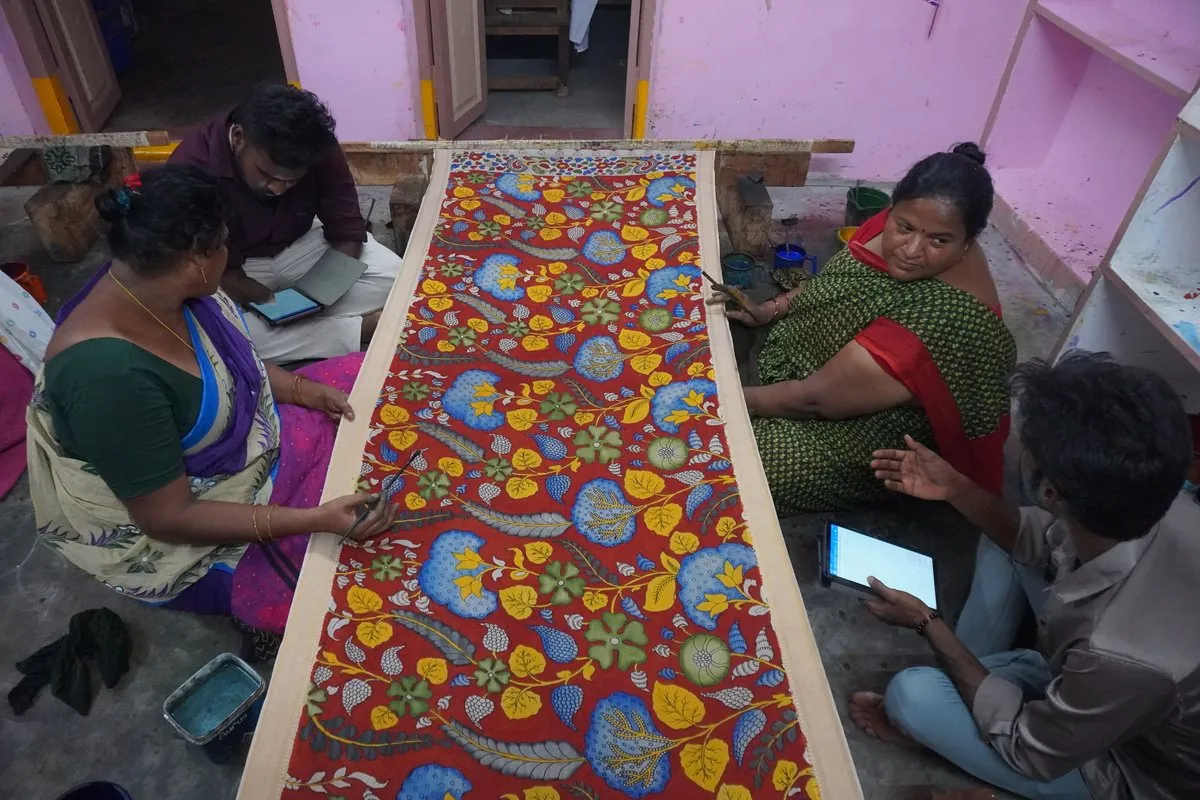
We talked in kitchens, workshops, mills and fair stalls. You notice what nobody mentions: the number printed on the packet, the cash box, the cloth drying outside.
Be careful about who you talk to, and say who you didn't#
In Kerala and Rajasthan we reached people through the state missions and through referrals, but the missions didn't pick who we met. In Srikalahasti we surveyed every artisan in each workshop we chose, so we could compare people working under the same owner. Where Do Women Sell? says plainly who its findings don't represent, and the Kalamkari survey only speaks for the workshops we chose.
Hear both sides#
In Srikalahasti we interviewed workshop owners separately about pricing, hiring and training, and set that against what the artisans told us.
Record with consent, then read everything again#
In Kerala and Rajasthan we recorded interviews on video with each woman's consent, and read them alongside our field notes before writing anything.
Keep the numbers honest#
62 artisans is everyone in a set of workshops, not all of Srikalahasti. 80 interviews describe journeys, not a population. Saying so makes the findings easier to trust.
From the field to the product#
| What we saw | Where it shows up in Kaari |
|---|---|
| Most of the women we met already ran their business on WhatsApp. | The whole artisan side runs on WhatsApp, with no app to download. |
| A Shilp Guru loses buyers who don't speak Telugu. | Onboarding asks for a language first, in eight languages. |
| Pots like Mini Mohan's ₹50 ones sell online for ₹350–400. She didn't know. | Product pages are designed to show the full price breakdown. |
| Hima's name isn't on the packets her bulk buyers resell. | The artisan's name, village and cluster are on every listing. |
| Sushila would use a simple platform if someone walked her through it. | Local cluster heads help artisans in person with sign-up and photos. |
| Nine in ten Kalamkari artisans are paid in cash. | The artisan's 70% goes to their own bank account on delivery. |
Kaari is a prototype, and some of this fieldwork ran alongside it, so read these as connections, not proven results or a timeline.
The three studies: Where Do Women Sell? · The Kalamkari Project · From Product to Purchase