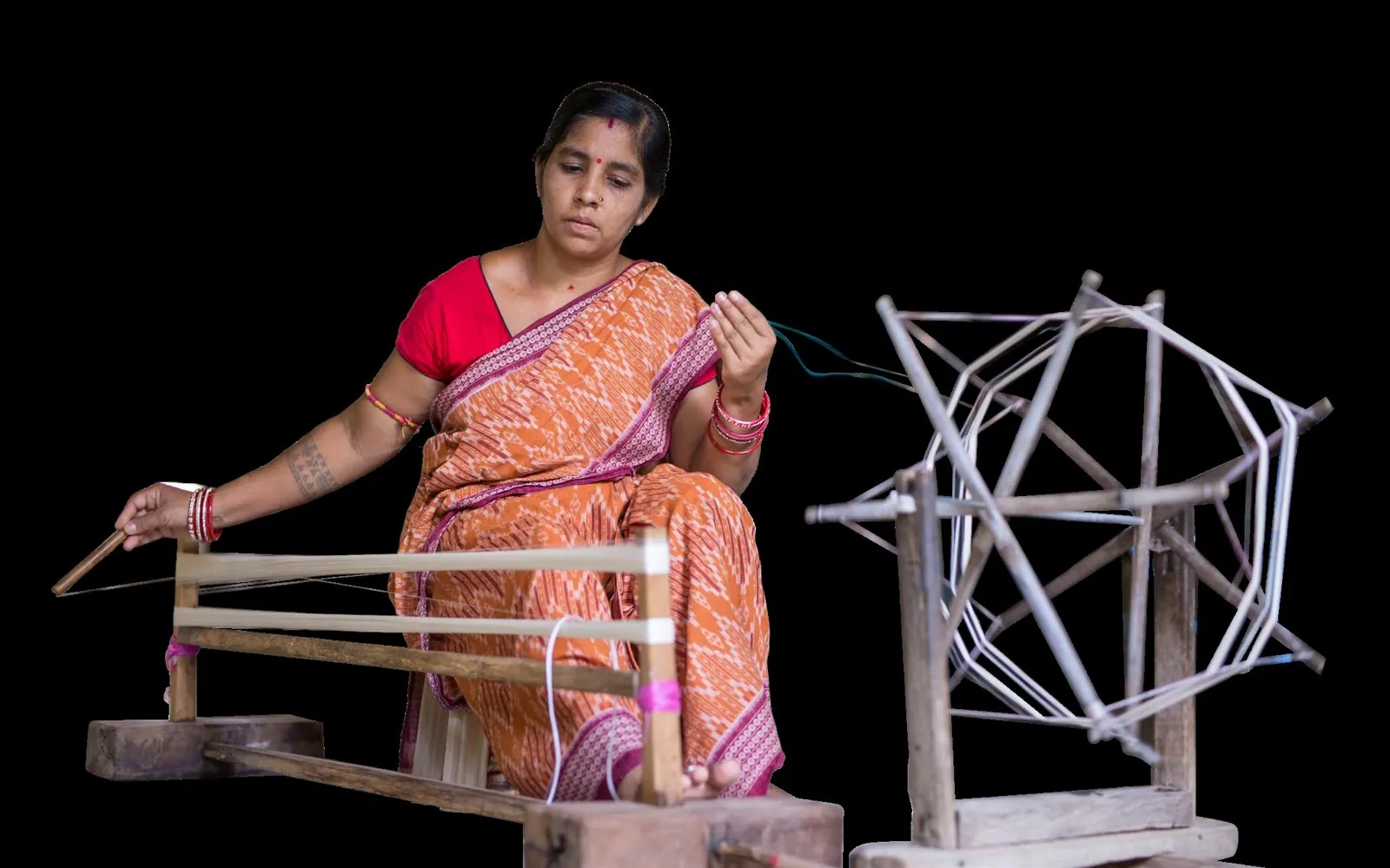

From Product to Purchase
A national report with the Ministry of Rural Development on how women-led rural enterprises reach buyers, and where the path from product to purchase breaks.
- Status
- Published · October 2026
- Full title
- From Product to Purchase: Market Access Pathways for Women-Led Rural Enterprises
- Prepared by
- LEAD at Krea University, with the Ministry of Rural Development's DAY-NRLM non-farm livelihoods team and the Gates Foundation
- Scope
- 40+ interviews with retail and institutional buyers, marketplaces, mission officials, logistics partners and entrepreneurs across states, plus customer surveys at SARAS melas
- My part
- Contributor. Background research and product mapping; an audit of e-SARAS, the government's store for these products
- Read it
- Full report (PDF)
What buyers told us#
Impact matters to us but only when it comes with reliability.
A buyer interviewed for the report
Buyers are happy to source from women's enterprises, but only when the basics hold: consistent quality, proper packaging, reliable delivery, predictable timelines. "Made by rural women" gets attention. It doesn't bring people back. For bulk orders, buyers named three must-haves: steady volumes, fixed lead times and standard finishing.
- 2–3×
- more repeat orders where groups worked with designers or used standard packaging
- ₹2,500–3,500
- the order size retailers trust for premium handmade products
- Under 2 weeks
- the cash cycle most groups run on
Below that price range, buyers doubt the product is authentic. Above it, they start comparing it with mass-market brands. At SARAS Mela in Delhi, only 13% of shoppers named supporting women entrepreneurs as a reason to buy; quality and value came first.
Platforms, side by side#
| Channel | Good for | What gets in the way |
|---|---|---|
| Amazon Saheli, Flipkart Samarth | Reach | Staying visible takes better catalogues, photos and paid promotion |
| GeM | Government and institutional buyers | Not a channel for retail shoppers |
| e-SARAS | Trust: buyers know it's genuine | Small audience; one agency runs all sales, which slows everything down |
| SARAS melas | First sales, exposure, learning | Rarely lead to repeat orders without a way to follow up |
Listing a product doesn't sell it. Platforms reward visibility, good photos, accurate descriptions and fast delivery.
Where it breaks#
- Fear of mistakes. Producers attend digital trainings, then hold back for fear of errors or fraud. Ongoing hand-holding until the first orders works better than a one-time session.
- Delivery. Remote clusters face courier gaps, long transit times and many returns, so marketplaces push them down the results.
- Working capital. With cash cycles under two weeks, many groups can't accept a large order without an advance. The report suggests invoice-based financing, small loans or advances from buyers.
- Data nobody uses. Sales, returns and buyer preferences are recorded, especially on e-SARAS and at melas, but rarely used to decide what to make next.
- Melas without follow-up. Collecting customer contacts and adding a QR code that links to an online store could turn first sales into repeat ones.
What I took from it#
It's the same pattern I saw in Kerala and Rajasthan, at national scale: the sale happens, and then the thread to the customer breaks. The money problem is concrete too. A group that turns its cash over every two weeks can't say yes to a big order unless someone fronts the money, which is exactly the gap invoice financing is built for.
Authors: Shrabani Mishra and Vinay Garg. Technical leads: Swati Sharma (Joint Secretary, Ministry of Rural Development), Sharon Buteau and Preethi Rao. I'm credited, with Arsh Maheswari, Mitansh Aggarwal and Niveditha Rajesh, for background research and data compilation.